
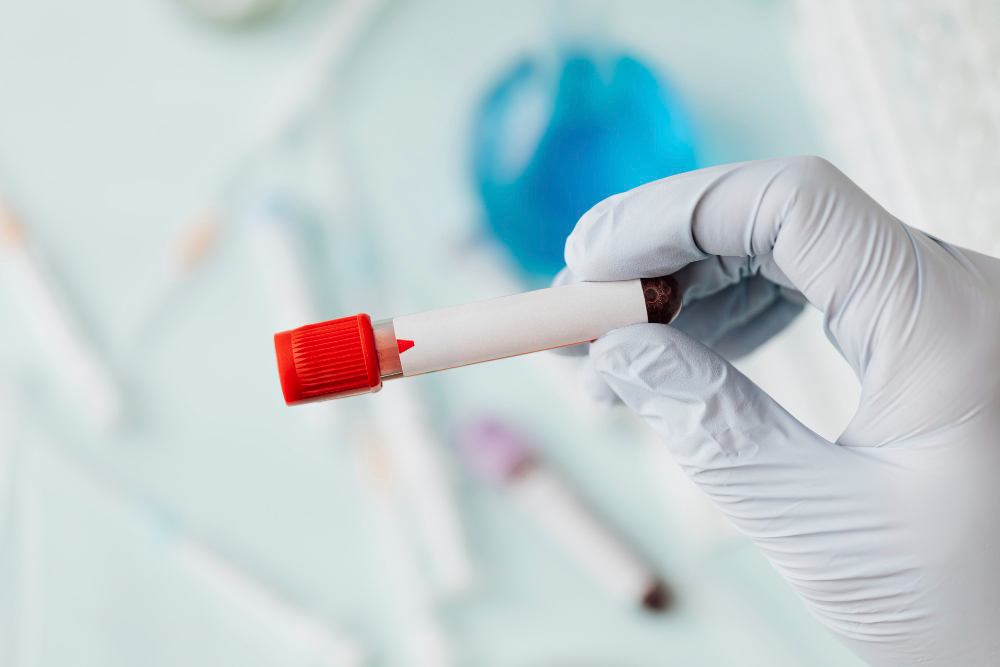
DNA testing has become much more accessible, but there are still plenty of misconceptions about what DNA tests can do, how they work, and how accurate they are.
Some people believe DNA testing always requires blood. Others think identical twins have completely different DNA or that a DNA test can answer every question about a person's health and family history.
Understanding what's true and what's not can help you make better decisions before taking a DNA test.
In this guide, we'll look at some of the most common myths about DNA testing and explain the facts behind them.
If you're interested in DNA and other laboratory investigations, you can explore available tests through AllAnalysis.
Myth 1: DNA Testing Always Requires Blood
Fact: Most routine DNA relationship tests do not require a blood sample.
A cheek swab is commonly used to collect DNA. The swab collects cells from inside the cheek that contain DNA.
Cheek-swab collection is quick, painless, and non-invasive, making it suitable for both adults and children.
Blood can also be used for certain types of genetic testing, but it isn't always necessary.
Myth 2: DNA Tests Are Always 100% Accurate
Fact: DNA testing can be extremely reliable, but there isn't one accuracy percentage that applies to every type of DNA test.
Paternity, sibling, grandparent, ancestry, and health-related genetic tests all work differently.
Relationship tests can provide very strong statistical evidence when the correct people are tested and the samples are properly collected and analysed.
The accuracy and interpretation of a test depend on what the test is designed to determine.
Myth 3: A DNA Test Can Tell You Everything About Your Health
Fact: No single DNA test can tell you everything about your health.
Genetic tests can identify certain genetic variants or provide information about specific health risks, but many factors affect health, including lifestyle, environment, age, and other biological factors.
Some genetic tests are designed to identify specific conditions, while others estimate risk.
A genetic result should therefore be interpreted in the context of the particular test performed.
Myth 4: DNA Testing Is Only Used for Paternity
Fact: Paternity testing is only one type of DNA testing.
DNA can also be used to investigate:
- Maternity.
- Sibling relationships.
- Grandparent relationships.
- Aunt and uncle relationships.
- Twin relationships.
- Immigration-related family relationships.
- Certain genetic conditions.
- Ancestry.
The appropriate test depends on the question you are trying to answer.
Myth 5: Identical Twins Have Completely Different DNA
Fact: Identical twins have extremely similar nuclear DNA.
They develop from the same fertilised egg, which later separates into two embryos.
Because their genetic profiles are so similar, standard DNA profiling may not reliably distinguish one identical twin from another.
However, small genetic differences can develop during their lives.
Myth 6: Fraternal Twins Have the Same DNA
Fact: Fraternal twins do not have identical DNA.
They develop from two separate eggs fertilised by two separate sperm cells.
Genetically, they are similar to ordinary siblings and share, on average, about half of their genetic variation.
They can also be different sexes.
Myth 7: A DNA Test Can Be Done With Any Hair
Fact: Not necessarily.
Hair may contain DNA, but the type and condition of the hair matter.
Hair with the root or follicular tissue attached is generally more useful for obtaining nuclear DNA than a hair shaft without the root.
Cheek swabs are usually a simpler and more reliable option for routine relationship testing.
If you want to test an unusual sample, contact the laboratory before submitting it.
Myth 8: You Can Collect a Legal DNA Sample Yourself at Home
Fact: A private home DNA test is not necessarily suitable for legal purposes.
Legal DNA testing usually involves identity verification, controlled sample collection, documentation, and chain-of-custody procedures.
These steps help establish that the DNA sample belongs to the person identified in the report.
If the result will be used for immigration, court proceedings, inheritance, or another official purpose, arrange a legal test from the beginning.
Myth 9: DNA Results Can Be Changed
Fact: A person's underlying DNA doesn't normally change simply because it is tested more than once.
However, the interpretation of some genetic results can change as scientific knowledge and databases improve.
This is particularly relevant to ancestry and some health-related genetic tests.
For example, ancestry estimates may change when a testing company updates its reference populations or analysis methods.
Myth 10: A DNA Test Can Always Identify a Person
Fact: DNA can be extremely useful for identification, but it isn't always possible to identify someone from a DNA sample alone.
For example, identical twins can have extremely similar DNA profiles, making them difficult to distinguish using standard forensic DNA testing.
The quality of the sample and the availability of a suitable reference profile also matter.
Myth 11: DNA Testing Is Painful
Fact: Most routine DNA relationship tests are painless.
A cheek swab is gently rubbed against the inside of the cheek to collect cells.
There is no needle involved in standard cheek-swab collection.
Myth 12: DNA Testing Can Tell You Exactly Where Your Ancestors Came From
Fact: Ancestry DNA tests provide estimates rather than a perfect map of someone's ancestry.
These tests compare genetic patterns with reference populations.
Different companies use different databases and methods, so ancestry estimates can vary.
An ancestry result should therefore be viewed as an estimate based on available genetic reference data rather than an exact historical record.
Myth 13: A Negative DNA Test Means There Is No Biological Relationship
Fact: The meaning of a negative result depends on the type of test performed.
For a direct paternity or maternity test, an exclusion can provide strong evidence against the proposed parent-child relationship.
However, more distant relationships can be harder to investigate.
A negative or inconclusive result from a complex relationship test may need to be interpreted in the context of the family structure and the people tested.
Myth 14: More People Cannot Improve a DNA Test
Fact: Testing additional relatives can sometimes provide more useful genetic information.
This is particularly important for indirect relationship tests.
For example, if an alleged father is unavailable, testing his parents or siblings may help investigate a relationship with a child.
The laboratory can recommend which additional relatives would be most informative.
Myth 15: A DNA Test Automatically Proves a Legal Relationship
Fact: A DNA test establishes or investigates a biological relationship. It does not automatically determine every legal right or family status.
For example, proving biological paternity does not necessarily answer every question involving custody, inheritance, parental responsibility, or other legal matters.
Legal consequences depend on the laws and circumstances involved.
Myth 16: All DNA Tests Are the Same
Fact: DNA tests are designed for different purposes.
A paternity test isn't the same as an ancestry test, and a health-related genetic test isn't the same as a sibling test.
Each type of testing may use different genetic markers, reference information, and methods of interpretation.
Before testing, make sure you know exactly what question the test is designed to answer.
Myth 17: A Home DNA Test Is Always Enough
Fact: It depends on why you're testing.
If you simply want information for your own knowledge, a private home test may be suitable.
If you need the result for immigration, court proceedings, inheritance, or another official purpose, a legal test with identity verification and chain-of-custody procedures may be required.
Myth 18: DNA Testing Can Reveal Everything About Your Family
Fact: DNA testing can provide significant information about biological relationships, but it doesn't necessarily reveal every detail about a family.
A test may identify genetic relationships or provide ancestry estimates, but it cannot automatically explain every family event, adoption, social relationship, or historical circumstance.
DNA provides biological information. The wider meaning often requires additional family records and context.
How to Avoid DNA Testing Misconceptions
Before taking a DNA test, ask the testing provider:
- What exactly does this test determine?
- Which people need to provide samples?
- What type of sample is required?
- How will the results be interpreted?
- Is the test private or legal?
- Can the result be used for immigration or court purposes?
- How long will the test take?
- How will my genetic information be handled?
A reputable testing provider should clearly explain what the test can and cannot establish.
Frequently Asked Questions
Does DNA testing always require blood?
No. Cheek swabs are commonly used for many DNA tests.
Are DNA tests always 100% accurate?
No single accuracy figure applies to every type of DNA test. Accuracy depends on the test, sample, laboratory methods, and interpretation.
Can DNA testing only be used for paternity?
No. DNA testing can investigate many biological relationships, including maternity, siblings, grandparents, and aunt or uncle relationships.
Can identical twins be distinguished using DNA?
Standard DNA profiling may not reliably distinguish identical twins because their nuclear DNA is extremely similar.
Can any hair sample be used for DNA testing?
Not necessarily. Hair with the root attached is generally more useful for nuclear DNA testing than hair without the root.
Can I use a home DNA test in court?
A home-collected private test may not meet legal requirements. Official cases may require controlled collection, identity verification, and chain of custody.
Can DNA tests reveal my entire health history?
No. Genetic tests provide specific information depending on what they are designed to analyse.
Can DNA testing reveal ancestry?
Yes, ancestry testing can estimate genetic ancestry by comparing DNA with reference populations, but the results are estimates.
Final Thoughts
DNA testing is a powerful scientific tool, but it isn't a magic answer to every biological or family question.
A cheek swab can provide enough DNA for many routine tests, while different types of DNA analysis are used for relationships, ancestry, health-related genetics, and identification.
The most important thing is to understand what your particular DNA test is designed to determine. A paternity test, sibling test, ancestry test, and genetic health test can have very different methods and interpretations.
If you're considering a DNA test, choose a reputable testing provider and make sure you understand whether you need a private or legally documented test.
If you're looking for DNA and other laboratory testing services, explore the available tests through AllAnalysis.
You can also read more DNA and laboratory testing guides on the AllAnalysis blog to learn more about different tests and how DNA results are interpreted.
